

During Milan Design Week 2026, several installations stood out for what they did not fill. The object itself was no longer always the centre of attention. Instead, the space around it became active. Atmosphere, silence, distance and emotional presence became almost tangible.
At ELLE Decor Italia, empty space functioned not as absence, but as a way to create focus, calm and awareness. Light, transitions and spatial rhythm became part of the scenography itself.
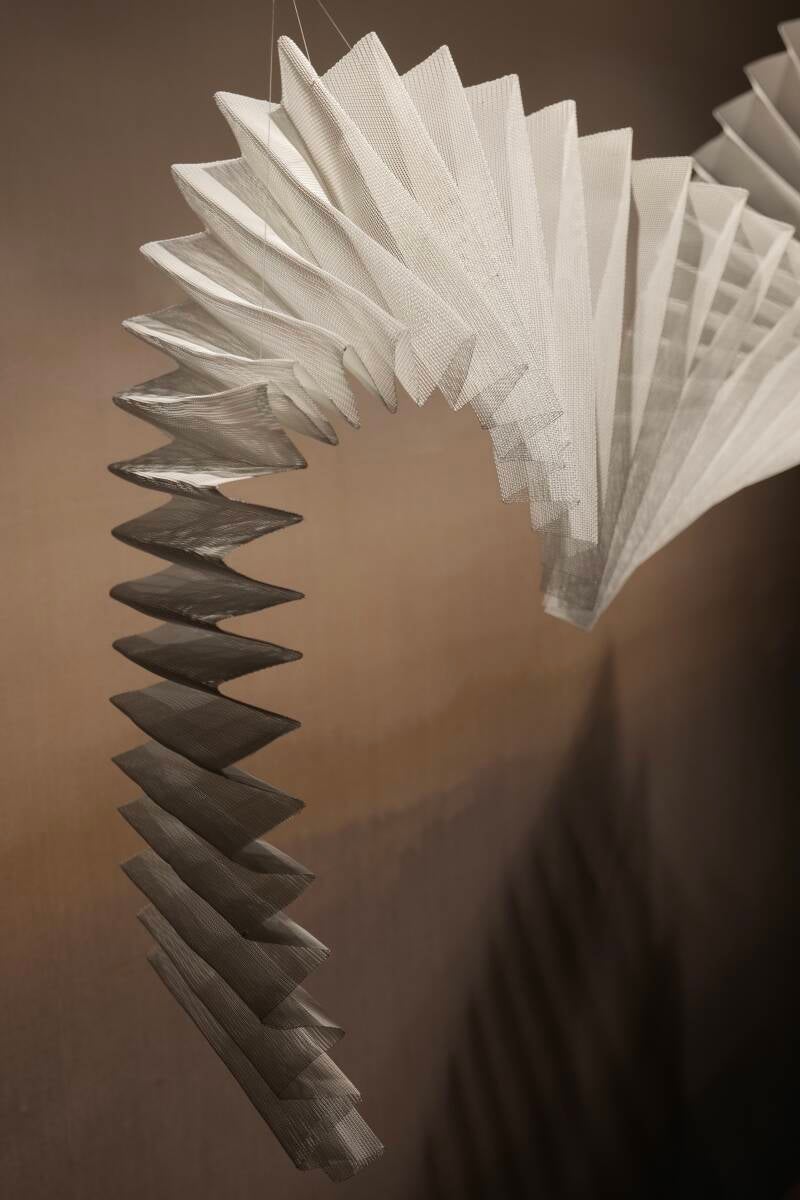
Looking back at earlier photographs from Milan, Hermès revealed the same quiet language. Their installation From Object to Space, designed by Charlotte Macaux Perelman and Alexis Fabry, used white plaster and beechwood structures to create a slow architectural journey through the room. Objects were placed at a distance from one another, allowing emptiness, rhythm and perspective to become part of the experience.


Even the project text was softly handwritten directly onto the wall in a pencil-like script. Almost fleeting in appearance. As if language itself had become quieter, softer and less dominant.


A similar sensibility appeared at BASE Milano in The Static Between Us by Anastrophes Collective, a project exploring air as a carrier of memory, emotion and connection. Not only physical matter moves between people, but also affect, energy and presence.

It connects closely to Ma Shiki · The Space Between, a theme I published in 2024 for trends 2026+. At the time, I was searching for a word to describe this growing shift and found the Japanese concept of ma, referring to the meaningful space between things. Combined with shiki, suggesting structure and rhythm, it became a way of describing an emerging desire for stillness, spatial awareness and intentional emptiness.
In a world of accelerating images, digital perfection and visual overload, the value of space itself is quietly growing.


Add comment
Comments